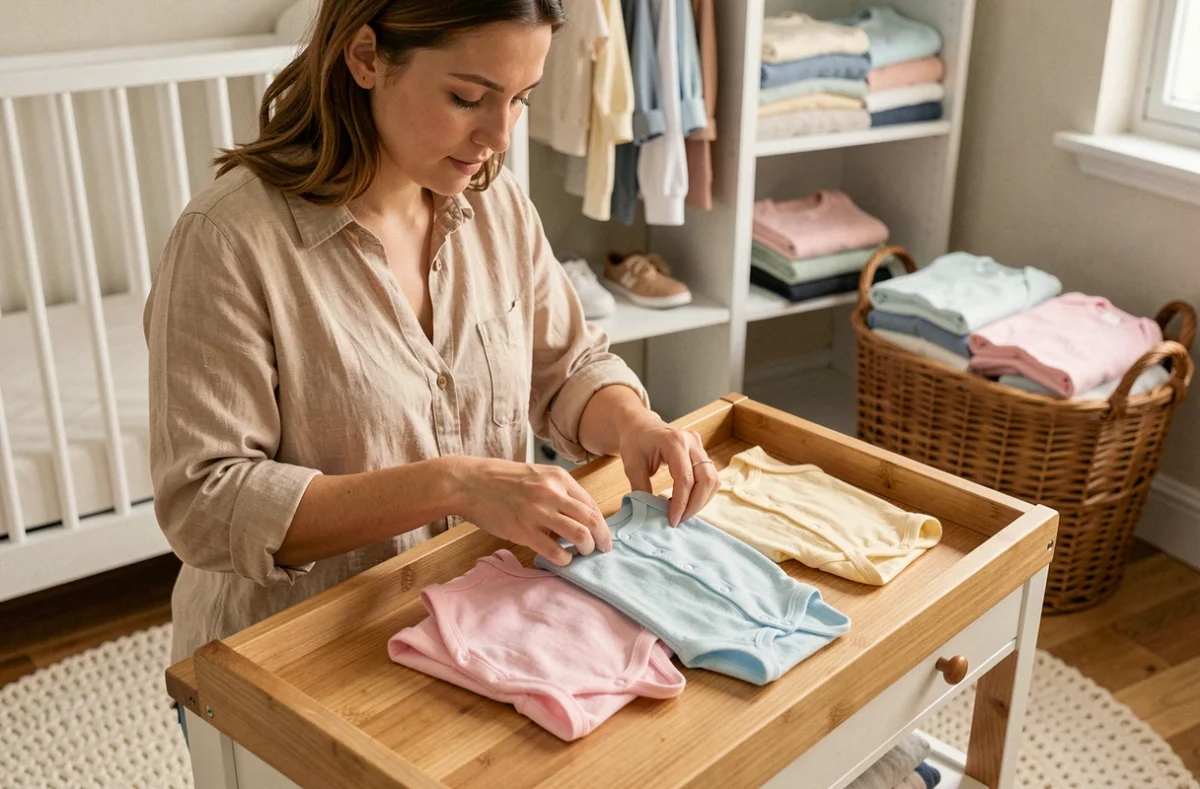
An infant cannot yet regulate their body temperature independently. Choosing suitable baby clothes therefore means solving a practical problem: maintaining a stable level of comfort as temperatures change between a heated home, a stroller outdoors and a car journey. Rather than building a wardrobe for every season, a few principles about fabrics, fit and layering are enough to cover most situations.
Managing temperature changes between indoors, transport and outdoors
Have you ever noticed your baby sweating in their car seat even though it was cool outside? The problem is rarely the clothing itself, but rather wearing too many layers at the wrong time. A home heated to 20–22 °C, a crowded subway or a car interior in the sun creates a very different microclimate from the street in winter.
The most reliable solution is to use three thin layers rather than one thick one. A long-sleeved bodysuit next to the skin, a knitted cardigan or vest, and a one-piece outfit or coat on top. Remove the outer layer as soon as you enter a heated place, without waking the baby if the fastenings are easy to reach.
France’s public health agency, Santé publique France, also points out that during periods of extreme heat, a baby can stay in just a diaper indoors, including while sleeping. The goal is not to follow the season on the calendar, but the actual temperature where the child is. To find pieces designed for this kind of layering, several specialist brands offer versatile collections. For example, https://www.babybloom.fr brings together bodysuits, vests and one-piece outfits designed to pair easily.
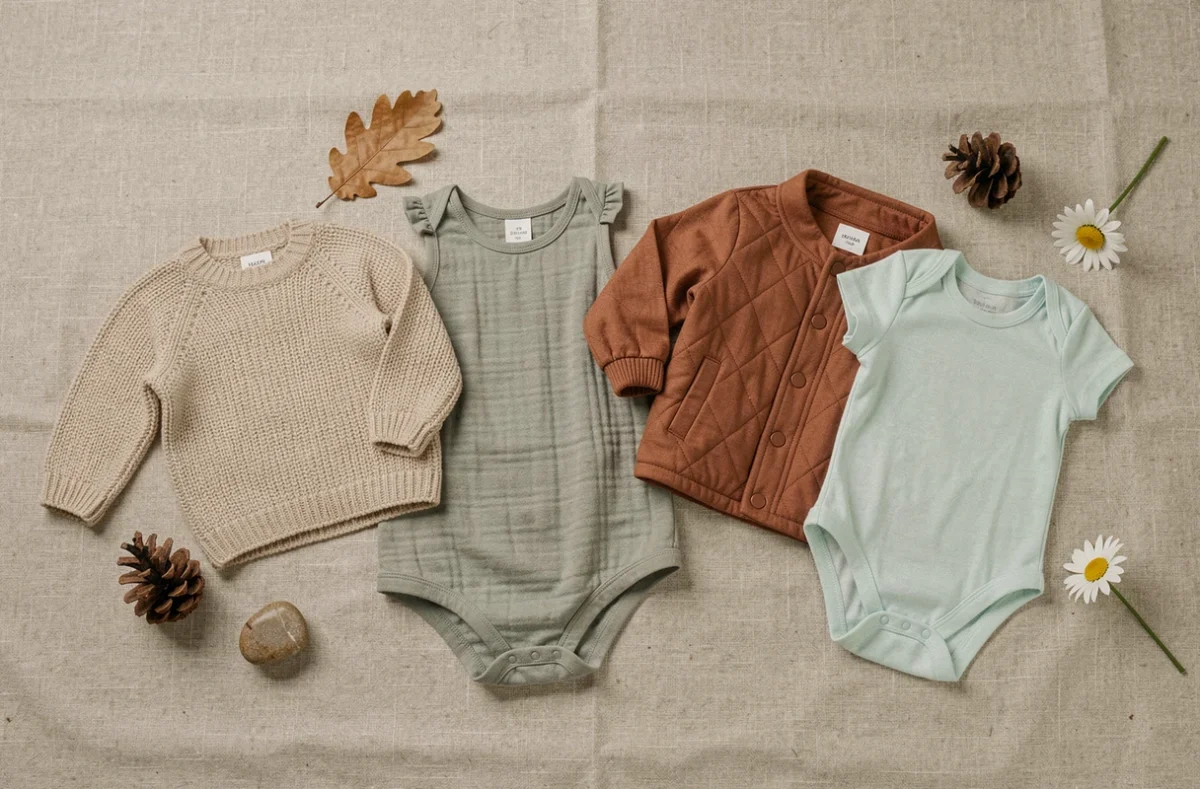
Check your baby’s thermal comfort by touch
The nape of the neck is the most reliable place to check. If it feels damp, remove a layer. If it feels cool, add one. Infants’ hands and feet are often cold without this indicating real discomfort, because their peripheral circulation is still immature.
Cotton, merino wool, bamboo: which fabric should you choose for your baby’s skin?
Organic cotton remains the go-to choice for clothes worn next to the skin. It absorbs moisture, withstands frequent washing and is unlikely to cause reactions on sensitive skin. It is the safest choice for bodysuits, pajamas and newborn vests.
Merino wool has an advantage cotton does not: it regulates temperature in both directions. It keeps your baby warm when it is cold and wicks away excess heat when they are warm. A lightweight merino bodysuit can replace a cotton bodysuit and cardigan, making dressing simpler.
Bamboo-fiber fabric is popular for its softness, but it undergoes chemical processing (the viscose process) to become a textile. Its real benefits therefore depend on the process used by the manufacturer. For parents, checking the fabric’s certification (Oeko-Tex, GOTS) is more reliable than trusting the word “bamboo” on the label.
Chemicals: what European regulations say
The REACH regulation governs chemicals in products placed on the European market, including baby clothes. Checking a garment’s composition and traceability offers better protection than relying on a marketing claim such as “natural” or “chemical-free.”
A specific regulatory change is on the way: a restriction on PFHxA and related substances (part of the PFAS family, used to make some textiles waterproof or stain-resistant) will apply from October 10, 2026 to certain categories of consumer clothing. When buying waterproof clothing (rain suits, overtrousers), it is best to check the manufacturer’s statements rather than assume the product complies.
A baby wardrobe for every season: the pieces you’ll actually use
Stocking up on clothes “just in case” is expensive and takes up space. Babies grow quickly and wear each size for only a few weeks. Here are the pieces that cover most needs, whatever time of year your baby is born.
- Short- and long-sleeved cotton bodysuits: the foundation of every outfit. Have both sleeve lengths on hand, even in summer, as air conditioning or a cool evening can make a difference.
- Pajamas with a front or side fastening: easier to put on than a back-fastening style, especially at night. Choose snaps rather than zippers, which can pinch the skin.
- A sleeping bag suited to the room temperature: it replaces a blanket (which should not be used in an infant’s crib) and comes in different thicknesses measured in TOG.
- A lightweight knitted vest or cardigan: the ideal middle layer. It is easy to put on and take off without undressing the baby.
- Knee-high socks or soft booties: feet get cold quickly, even indoors. Choose styles with a soft elastic that won’t leave a mark on the ankle.
Newborn size or 1-month size: which should you buy?
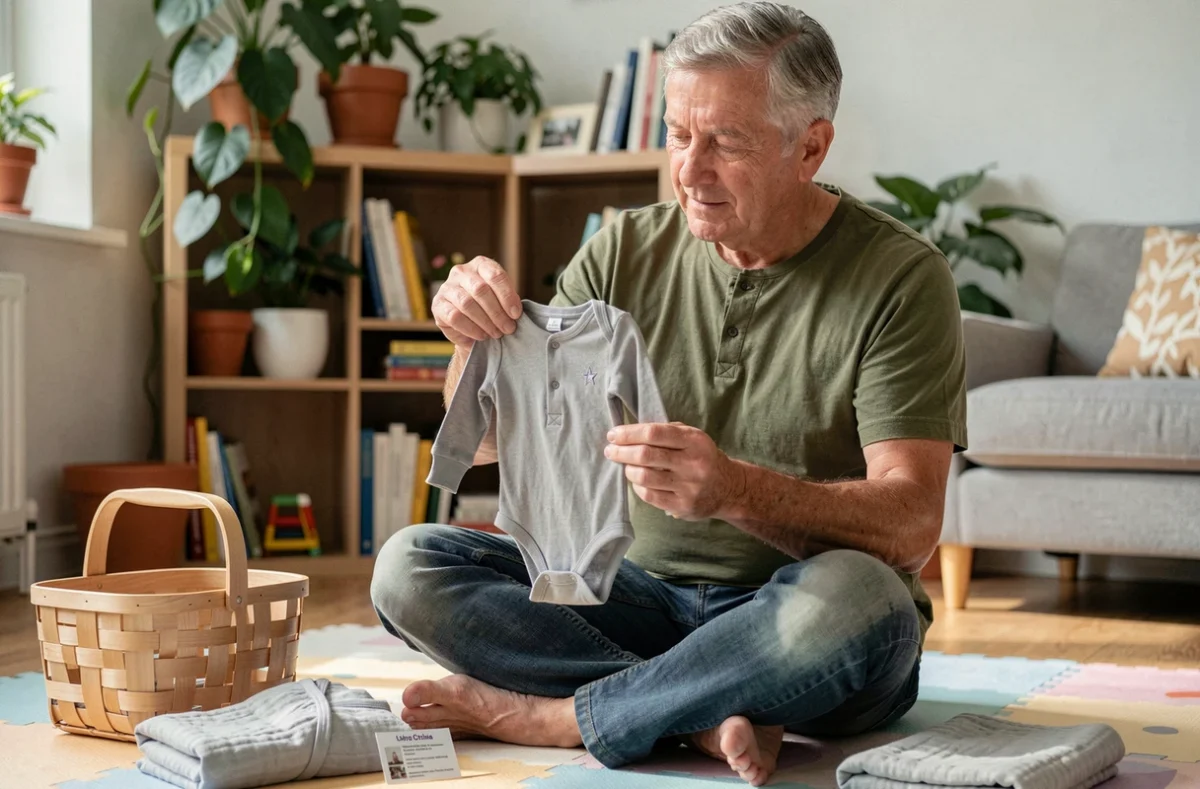
“Newborn” size generally fits babies weighing less than about 3.3 kg. Many newborns outgrow it by the time they leave the maternity ward. Buying most items in 1-month size reduces the risk of clothes never being worn. A few newborn-size bodysuits and one pajama are enough for the first few days.
Caring for baby clothes: how to keep fabrics soft
Cotton washed with regular fabric softener may feel softer, but the coating left on the fibers can irritate an infant’s skin. Choose an extra rinse cycle and air-dry the clothes, which preserves the fabric’s elasticity longer than tumble-drying.
Washing new clothes before their first use removes dye or finishing residues. A 30 or 40 °C wash with fragrance-free detergent works for most fabrics. For merino wool, use a cold wool cycle and a gentle spin to prevent felting.
Clothes passed from one child to another retain their quality when care instructions are followed. A well-cared-for organic cotton bodysuit can withstand dozens of washes without losing its shape or softness, reducing the actual cost per wear.