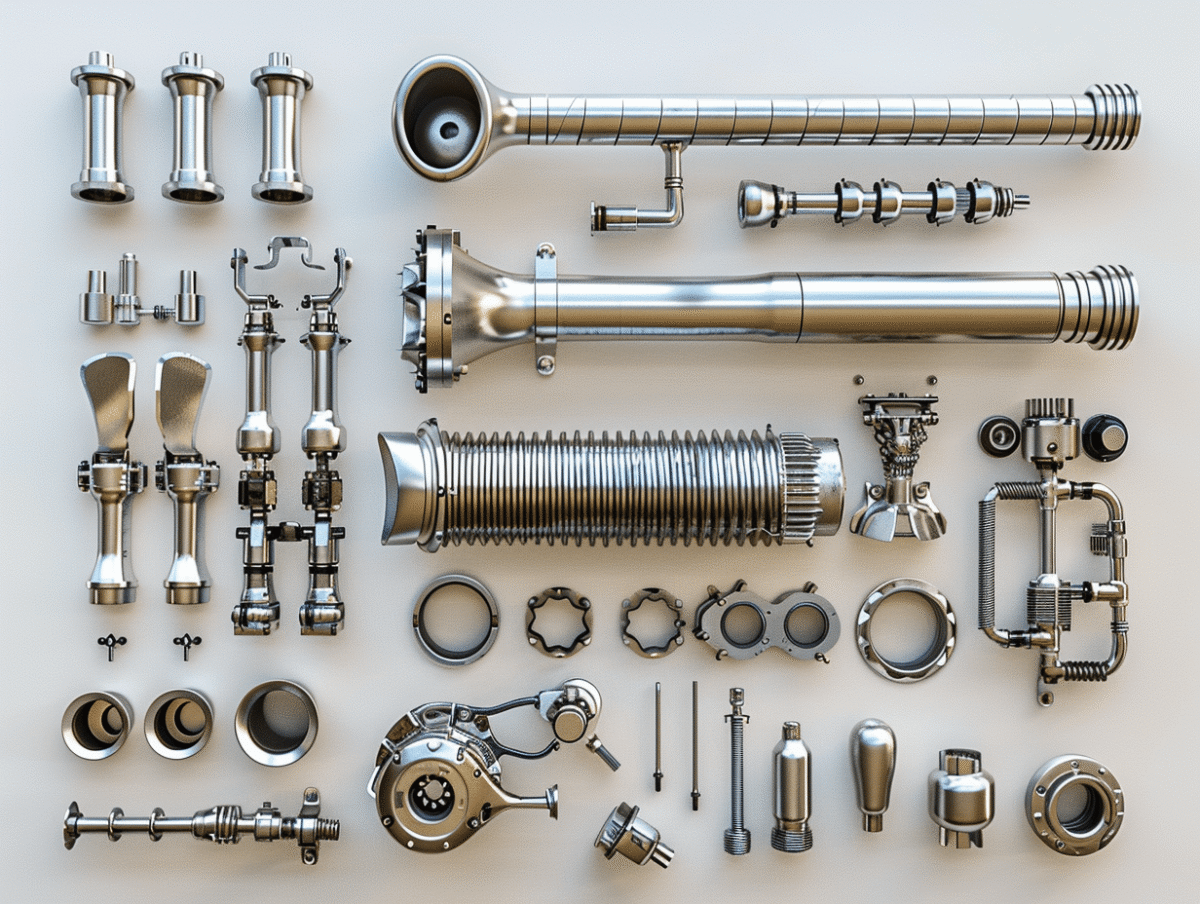
At the heart of automotive performance and ecology, the exhaust system plays a fundamental role. Its complex architecture is designed to reduce harmful emissions, mitigate noise, and optimize engine power. The main components include the exhaust manifold, which channels gases from the cylinders, the catalyst, which transforms harmful gases into less polluting substances, and the muffler, which reduces sound vibrations. The system is also equipped with an exhaust pipe, which expels gases to the outside, and a lambda sensor, essential for adjusting the air-fuel mixture and monitoring emissions.
The essential components of a car’s exhaust system
The exhaust system of a vehicle ensures vital functions for the proper operation of the engine and the preservation of the environment. Within this device, the exhaust manifold collects gases from combustion and directs them to the catalyst. Mandatory since 1997, the latter transforms toxic gases into less harmful compounds: carbon dioxide and water. The exhaust line, the centerpiece of the system, also integrates the DPF (Diesel Particulate Filter), which intercepts and retains fine particles to prevent their dispersion into the atmosphere.
Beyond gas purification, the car exhaust line diagram reveals an ingeniously designed set to reduce the noise produced by the engine. The front and rear mufflers form an acoustic barrier, with the latter minimizing noise disturbances. Their presence is both a guarantee of comfort for passengers and a compliance with noise regulations imposed by legislation.
Follow the path of the gases: from the exit of the cylinders, passing through the manifold, purified by the catalyst and the DPF, to the silence offered by the mufflers, before being finally released into the atmosphere. The harmonious operation of these elements signifies a healthy engine and a reduced ecological footprint. Their regular maintenance and careful inspection should therefore be prioritized to ensure the longevity and efficiency of your vehicle.

Maintenance and signs of exhaust system failure
The exhaust system, subjected to internal and external corrosion, daily shocks – potholes, speed bumps, curbs – and high temperatures that can reach 900°C, requires special attention. Simple actions, such as taking long trips to allow optimal evaporation of moisture or avoiding driving with a nearly empty tank to preserve the catalyst, extend the lifespan of this complex device. Ensure proper maintenance, essential for the integrity and performance of your vehicle.
Warning signs of failure should not be overlooked: unusual vibrations, loss of power, emission of black smoke, abnormal engine noises, or even excessive fuel consumption can indicate a malfunction of the exhaust system. These symptoms, often gradual, are the alarm signal of a struggling system, potentially dangerous for the environment and the health of road users.
Take the initiative for a diagnosis by a professional. Periodic checks are key to detecting any signs of weakness in the exhaust system. This technical vigilance is the guarantee of safe driving and a contained environmental footprint. Ensure your vehicle takes into account the specifics of your driver profile, opting for a suitable plan that will cover any potential repairs without overly burdening your budget.