The opening calendar of a Marguerite house rarely follows a linear logic. Administrative procedures can be completed before the budget is validated, while transformation work sometimes begins without the project being fully finalized. Some owners neglect the optimization of secondary rooms, which hinders the attractiveness of the place as soon as it is put up for rent. Recurring mistakes persist in the management of shared spaces, often due to a lack of anticipation regarding future needs. Adapting bedrooms or rehabilitating a garage requires meticulous organization and careful monitoring of the actual usage by residents.
Why transforming a room into a Marguerite house can change daily life
Opening a Marguerite house is not just about redistributing square meters of a dwelling. Transforming a bedroom, a living room, or a previously unused space into a Marguerite house disrupts the balance of daily life and redefines the meaning of hospitality. This initiative, started in 2016 by Jacqueline Decultis, a former liberal nurse and pioneer of the concept, is based on a strong idea: shared housing must become a lever of solidarity, kindness, and autonomy for seniors.
Residents gain a renewed independence, without ever sacrificing exchange or the pleasure of being together. The shared housing model of the Marguerite Houses network, led by Mathieu Decultis and supported by La Nef, chooses an organization where everyone truly matters. In Saint-Yan, Valréas, Saint-Étienne, and elsewhere, these houses are established in the heart of neighborhoods, close to shops and services, so that daily life remains simple and accessible.
Opening and creating a Marguerite house means committing to a project that respects the residents, with a structure of independent concessions that values trust and serenity, according to the ESUS label charter. Common areas transform into real living spaces, bedrooms adjust to everyone’s needs, and long-neglected areas become inviting spots for exchange or rest.
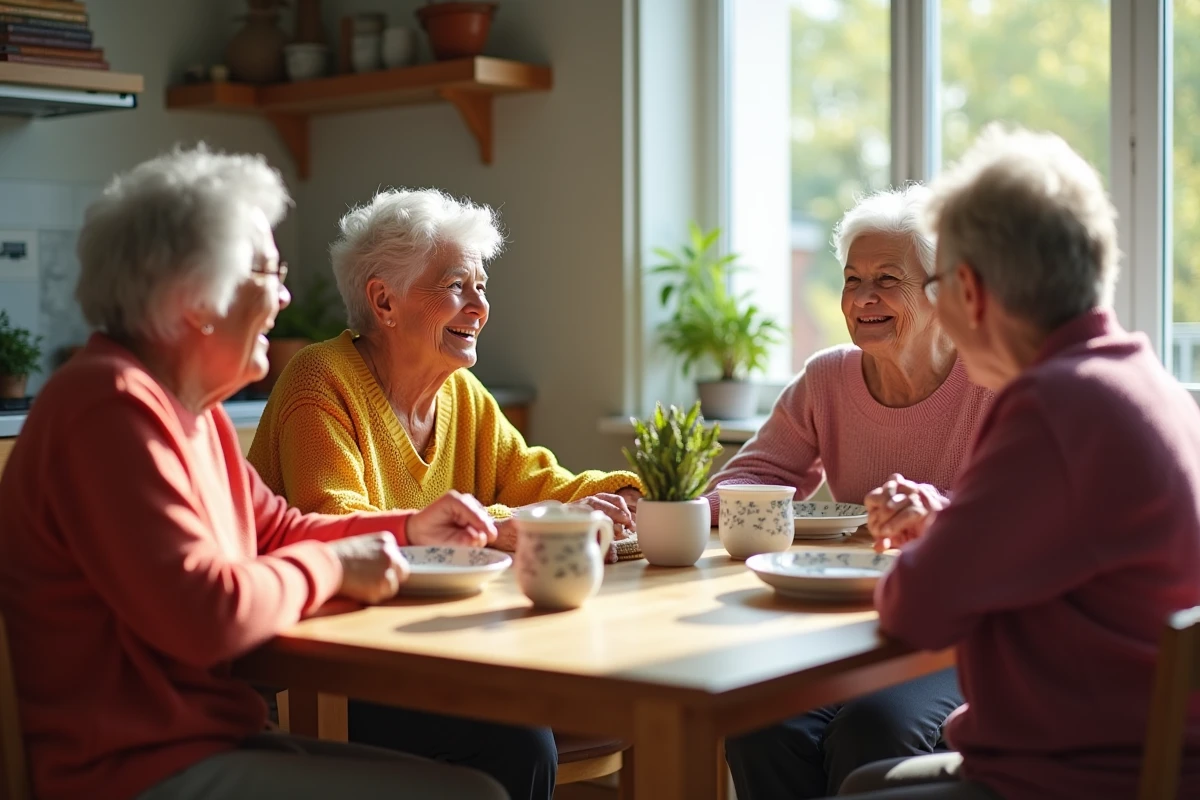
Daily life transforms: less loneliness, more connections. A network of mutual aid weaves together, creating security, belonging, and freedom. This project, designed first for the person and not for profitability, reinvents the daily lives of seniors in the face of the challenges of an aging society.
Which spaces to rethink as a priority: bedrooms, garages, and forgotten corners
For the Marguerite house to fulfill its promises, the layout of the bedroom must be the first priority. This intimate space must combine accessibility, comfort, and personalization. It’s not just about counting square meters: exposure to light, quality of storage, ease of movement—every choice affects autonomy and well-being. In Vindry-sur-Turdine, Marie Ruillard and Julie understood the importance of designing each bedroom according to the desires and constraints of their tenants, far from standardized norms.
Garages also hold often underestimated potential. An isolated garage can become a workshop, a common room, or an activity space. It adapts to demand: playroom, meeting space, or even an additional bathroom. In cities like Saint-Just-Saint-Rambert or Jayat, transforming the garage has allowed for the creation of versatile spaces, enhancing the conviviality and social life of the house.
Do not overlook the forgotten corners: nooks under the stairs, old laundry rooms, small annexes. When well-utilized, they help balance collective life and private space. Interventions by specialized teams, such as in Saint-Pal-de-Mons or Beauzac, show that no square meter should remain wasted. The challenge: to offer a modular, pleasant living environment, in line with urban planning standards and building constraints.
To make the most of each space, keep the following points in mind:
- Bedrooms: focus on ergonomics and natural light.
- Garages: transform them into multi-use rooms.
- Forgotten corners: convert every nook into a space for sharing or rejuvenation.

Concrete tips for arranging and personalizing your future Marguerite house
To successfully arrange a Marguerite house, start by observing how the residents live. Shared spaces should encourage conviviality while preserving individual freedom. The living room and kitchen, designed to promote collective life, also incorporate areas where everyone can isolate themselves according to their needs. Modularity is an asset: open up the volumes, favor movable partitions, and ensure ample natural light.
In every Marguerite house, safety and the ergonomics of movement are paramount. The integration of home automation solutions for lighting or access simplifies daily life. Choose robust, easy-to-maintain materials that are pleasant to live with. Take, for example, the project led in L’Isle-sur-le-Doubs by Olivia Gaiffe: every detail, from the flooring to the door handles, is designed to support the loss of autonomy and preserve the dignity of residents.
Personalization should never be relegated to the background. Give residents the opportunity to choose the layout of their room, to bring cherished items, and to green the shared spaces. The values of the network, solidarity, kindness, autonomy, come to life in the very design of the spaces. A well-thought-out layout nurtures the sense of belonging and fosters a true community.
Here are some essential tips for designing a Marguerite house that reflects you:
- Focus on open spaces filled with light
- Install adaptable equipment designed for mobility
- Involve future residents in decoration decisions
Opening a Marguerite house means transforming every corner into a promise of connection. More than just a layout, it is a project that shapes life and reinvents the very notion of shared housing. Who, tomorrow, will dare to push open the door of these houses to finally find a place of their own?