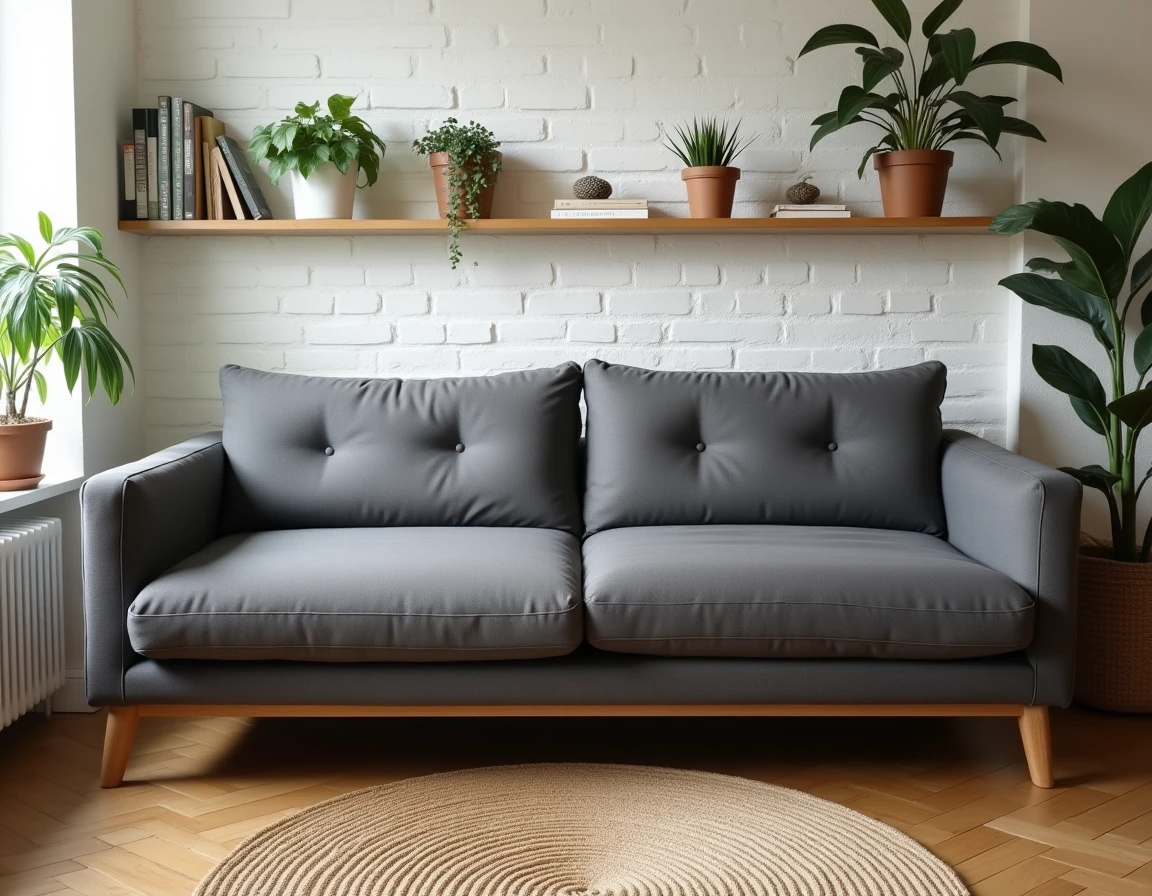
A clic-clac is a sofa whose seat and backrest unfold flat to form a bed, thanks to a two-step articulated mechanism (a “click” to unlock, a “clack” to unfold). This simple principle hides considerable quality differences from one model to another, and the choice depends on criteria that product sheets do not always highlight.
Thickness and density of the clic-clac mattress: the two values to check first
Most buying guides list the type of foam (polyurethane, Bultex, latex) without explaining what really matters for comfort. The material alone is not enough: it is the density of the foam that determines support.
For occasional sleeping (guests a few nights a month), a medium density is suitable. For daily use, a higher density prevents premature sagging of the mattress and lower back pain. The difference is felt within the first few weeks of regular use.
Thickness plays a complementary role. A thin mattress placed on a metal frame transmits the slats to the sleeper. The more generous the thickness, the more the mattress absorbs pressure points. When comparing in-store, sitting is not enough: you need to lie down for a few minutes in a sleeping position to assess the actual back support.
A detailed article on choosing a clic-clac on C Ma Déco allows for a deeper understanding of these technical criteria before purchase.

Clic-clac in a versatile living room: balancing style and actual use
The clic-clac suffers from a “student furniture” image that no longer corresponds to the current offering. Manufacturers offer corduroy covers, exposed wood structures, and lines inspired by Scandinavian design. The issue is no longer style, but the coherence between the chosen aesthetic and the daily use of the living room.
In a living room that also serves as a guest bedroom, office, or telecommuting space, the clic-clac must remain presentable when folded. A light cover stains quickly. A non-removable fabric covering complicates maintenance. A model that is too deep will consume circulation space when the living room resumes its primary function.
Fabric, faux leather, or velvet: choose according to the room
Polyester fabric withstands intensive use well and comes in all colors. Faux leather is easy to clean but sticks to the skin in summer and may crack after a few years. Velvet adds a marked decorative touch, provided you accept that it retains pet hair and dust.
- For a living room with children or pets, prioritize a removable and machine-washable fabric in a medium color (gray, dark blue, taupe) that masks light stains.
- For a seldom-used spare room, velvet or faux leather provides a more polished look without excessive maintenance constraints.
- For a studio or telecommuting space, an abrasion-resistant covering prevents accelerated wear due to daily friction.
The covering influences both the durability and appearance of the clic-clac over time.
Dimensions of the clic-clac and available space: measure before choosing
A clic-clac, when unfolded, takes up more space than one might think. The classic mistake is to measure the space in a seated position and forget the depth of the bed once opened. A standard model, once unfolded, can reach a depth that blocks access to a piece of furniture or a door.
Measure the space in bed configuration, not just in sofa position. It is also necessary to allow sufficient clearance in front of the clic-clac to unfold it without moving the coffee table each time.
Storage compartment: an asset that changes the practice
Some models include a storage compartment under the seat. In a small space, this storage volume accommodates a duvet, pillows, and sheets, which avoids searching for bedding in a closet each time it is used. This practical detail often makes the difference between a clic-clac that you willingly unfold and one that you end up not opening.
Mechanism and structure: what distinguishes a durable clic-clac from a disposable model
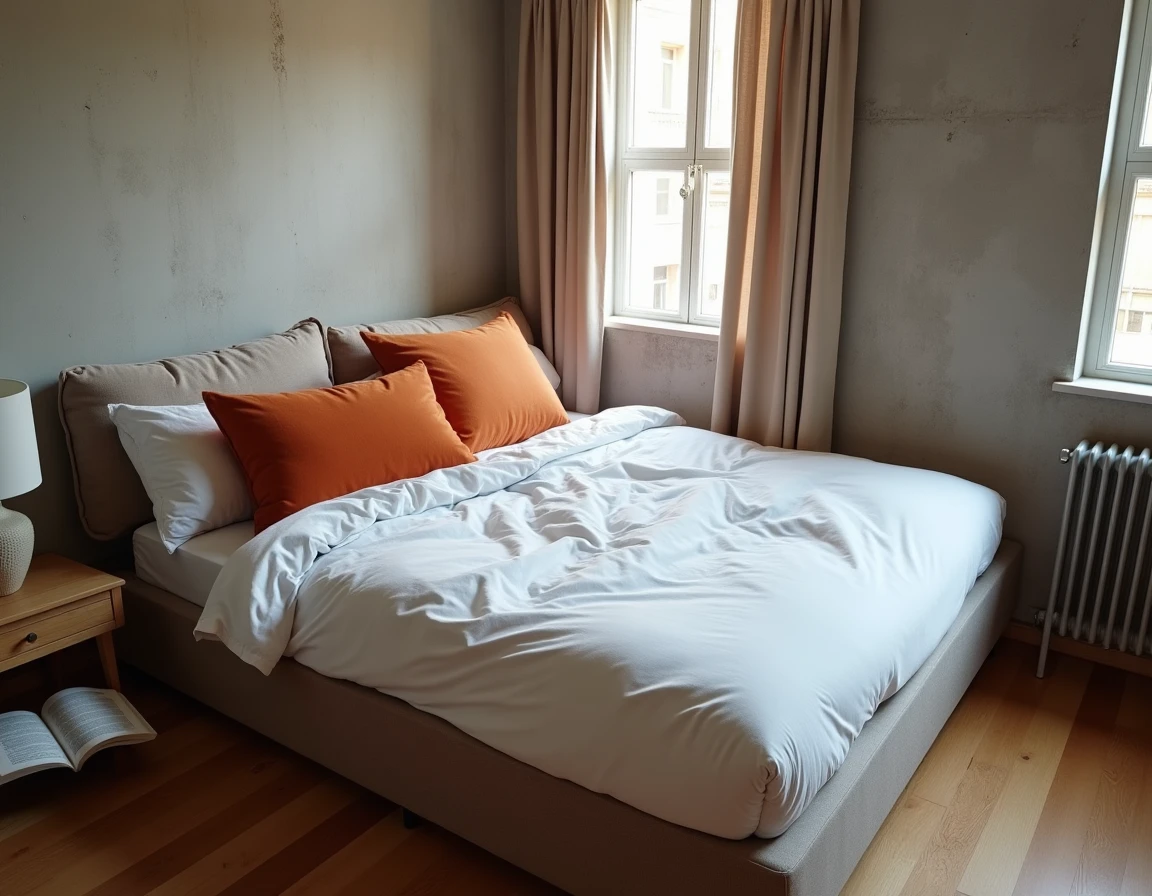
The opening mechanism undergoes mechanical stress with each handling. On a low-end model, the hinges wear out after a few months of regular use: locking becomes difficult, and the backrest no longer holds in a seated position.
A steel structure with clean welds and a notched locking system offers much better longevity than a frame made of thin tubes simply fitted together. In-store, testing the mechanism several times in a row allows you to spot play, squeaks, or excessive resistance that signal approximate manufacturing.
- Check that the mechanism can be operated with one hand, without forcing, for comfortable daily use.
- Check the stability of the backrest in a seated position: a backrest that moves back when you lean against it indicates a faulty notch.
- Observe the slats or the fabric of the bed base, which should be taut and evenly spaced for uniform support.
A solid mechanism is recognized by the in-store test, not by the technical sheet. Online descriptions often omit the actual quality of the frame.
The furniture market has experienced a slowdown in recent years, prompting retailers to refocus their offerings on durable products. The clic-clac benefits from this trend: mid-range models are improving in finishing quality and sleeping comfort.
Taking the time to compare mattress density, mechanism robustness, and the suitability of the covering with your lifestyle remains the best guarantee of a long-lasting purchase.