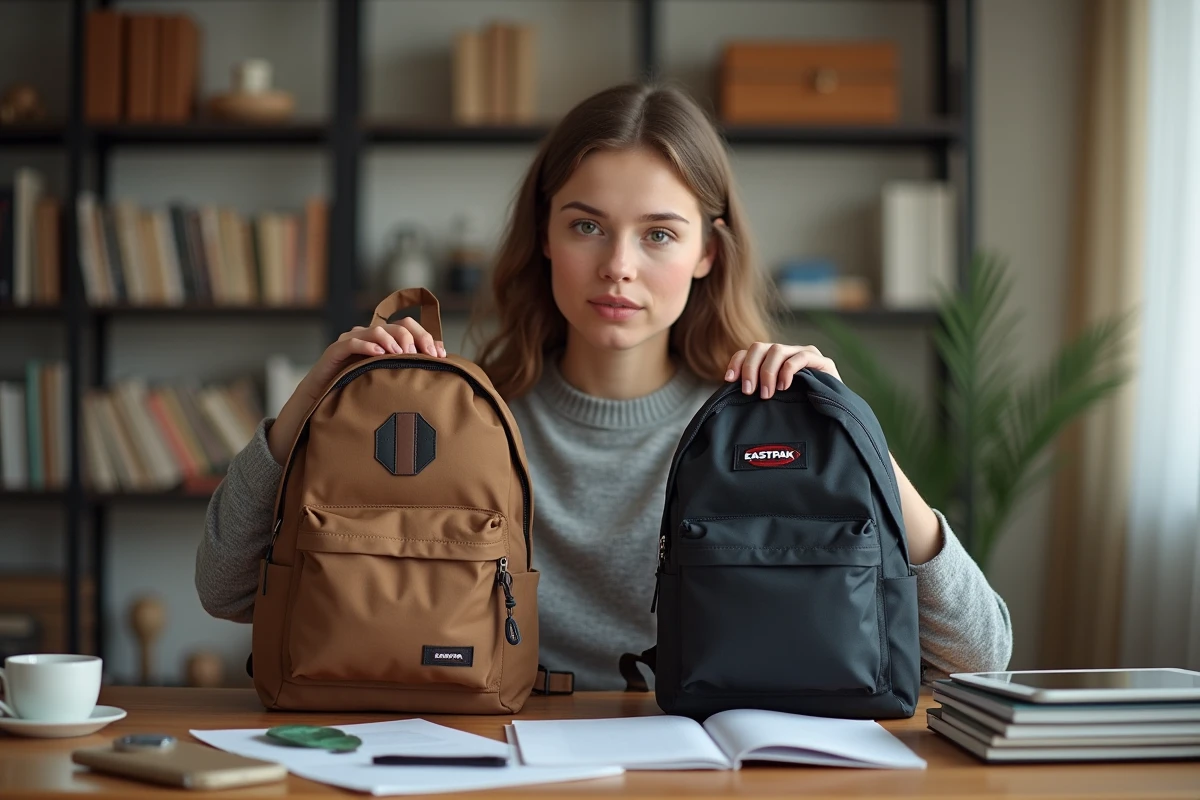
The classic visual criteria (stitching, logo, label) are no longer sufficient to filter out well-executed Eastpak counterfeits. Recognizing a fake Eastpak bag today requires cross-referencing the physical examination of the product with the verification of the seller’s commercial history. We detail five concrete checkpoints, from the most technical to the most strategic.
1. YKK or Eastpak branded zipper: the first material filter
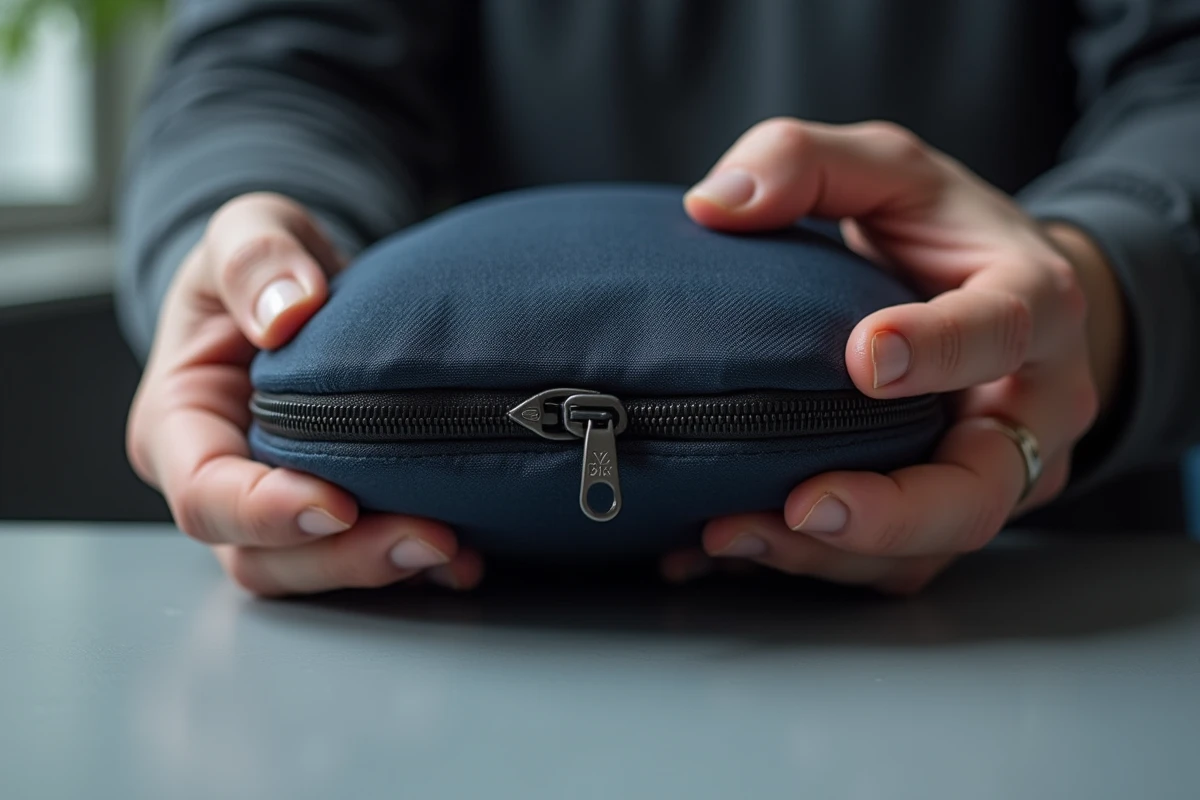
The zipper pull is the component most difficult to reproduce accurately for counterfeit workshops. On an authentic Eastpak, the zipper either has the marking YKK engraved in the metal or the inscription “EASTPAK” molded directly on the slider. The relief is sharp, without burrs, and the metal has a noticeable weight in hand.
A lightweight plastic slider, without marking or with blurry typography, almost always indicates a copy. We also recommend testing the smoothness of the zip: on an original, the slider glides without snagging or dry friction noise. Counterfeits use inferior toothed rails that jam after a few openings.
As detailed in the Fashionova article on counterfeit bags, this checkpoint remains one of the most reliable even in photos, provided the seller agrees to provide a macro shot of the pull tab.
2. Cordura fabric and weight: feel the density of the nylon
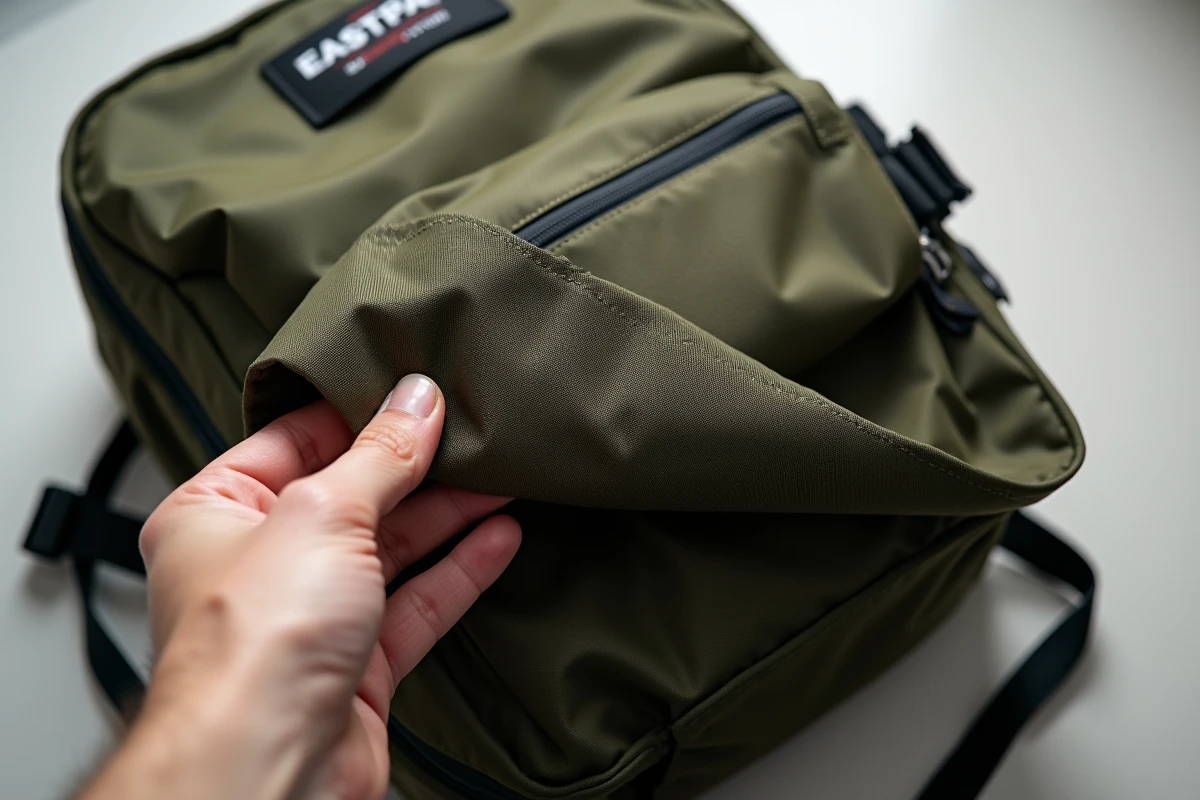
The Cordura nylon used by Eastpak is rough, thick, and abrasion-resistant. Running a thumb over the surface reveals a pronounced, almost coarse grain. The fabric does not wrinkle easily and returns to its shape when pinched.
Copies use a fine polyester, smooth to the touch, that bends without resistance. This cheap fabric is also recognizable by its tendency to pill quickly at friction points (straps, bottom of the bag). Online, a usable visual clue: authentic Cordura captures light in a matte and uniform manner, while a substitute polyester produces slightly shiny reflections in flash photos.
3. Eastpak inner label: typography, country of manufacture, and serial number
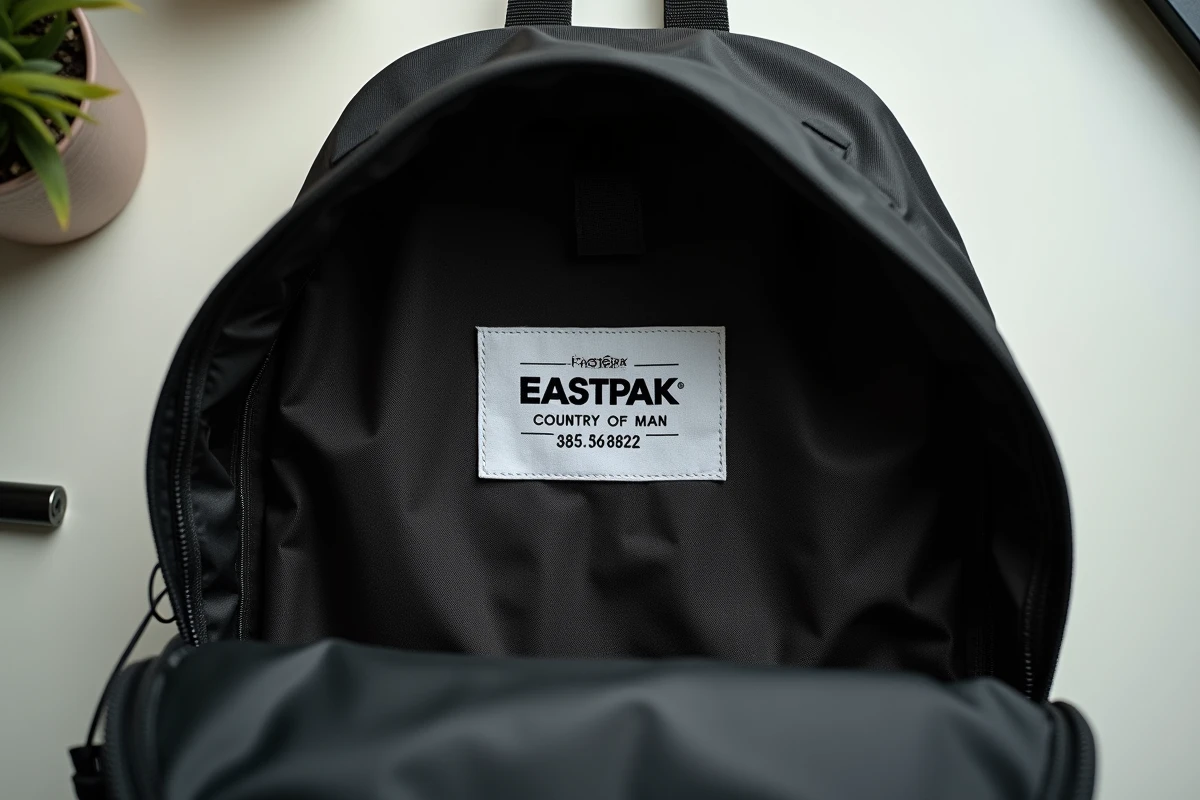
The label sewn inside the bag concentrates several authenticity markers. On an original model, it displays:
- The Eastpak logo printed in black on a white background, with sharp typography and regular spacing between the letters
- The country of manufacture (Vietnam, China, or Bangladesh are among the production sites declared by the brand)
- A serial number or product reference, sometimes accompanied by a barcode
On a counterfeit, the font is often slightly thicker or thinner than the original. The country of manufacture may be missing, or the label may indicate an inconsistent location. The absence of a serial number is a strong warning signal: Eastpak systematically references its models for quality tracking and warranty purposes.
4. Embroidered exterior logo: centering, colors, and thread consistency
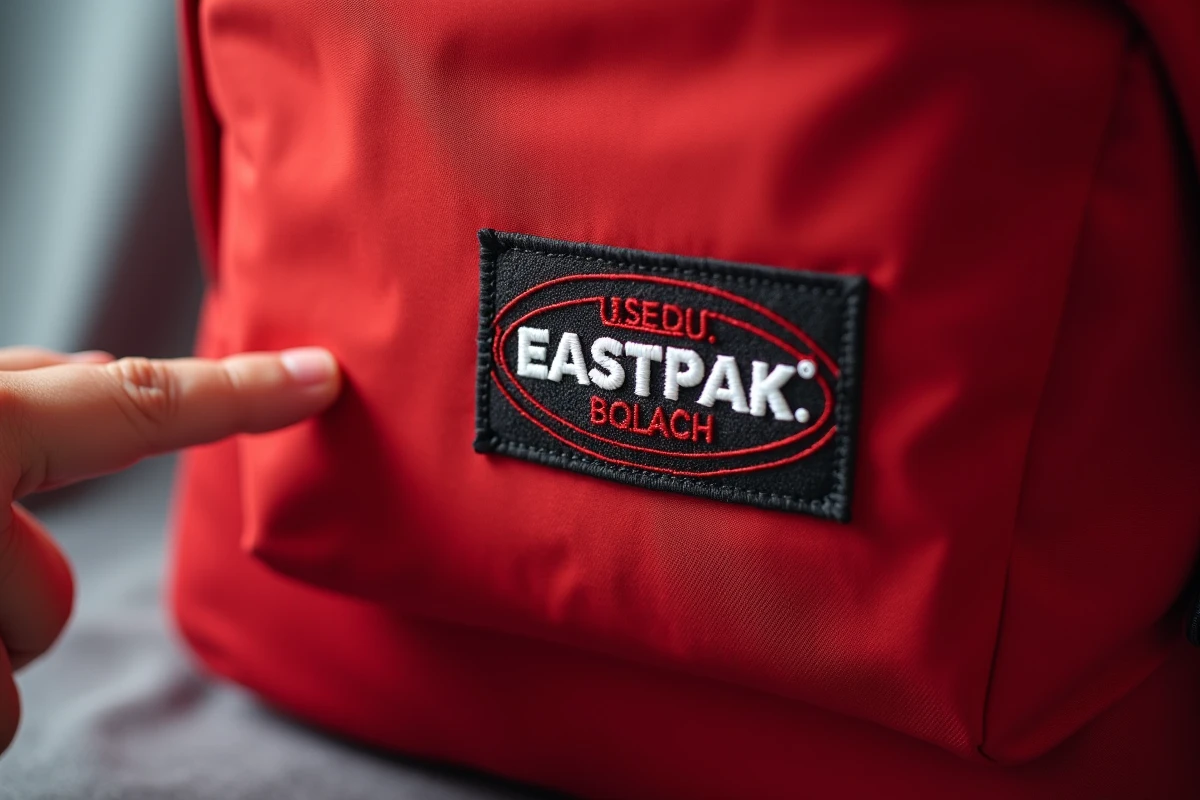
The embroidered logo on the front of the bag is the most scrutinized checkpoint, but also the one that counterfeiters imitate best. The difference lies in the fine details. On an authentic Eastpak, the embroidery is perfectly centered on the pocket, the colors (red, white, black) are bright and contrasting, and no thread protrudes from the outline of the letters.
We observe on recent copies logos that are visually close but betrayed by a slight misalignment or a red that leans towards orange. The density of the embroidery stitches also differs: an original has a tight and uniform fill, while a counterfeit reveals the underlying fabric between the threads. To verify this point on an online listing, request a photo of the logo taken from the front, in natural light, without filters.
5. Purchase chain, warranty, and return policy: authenticate the seller, not just the bag
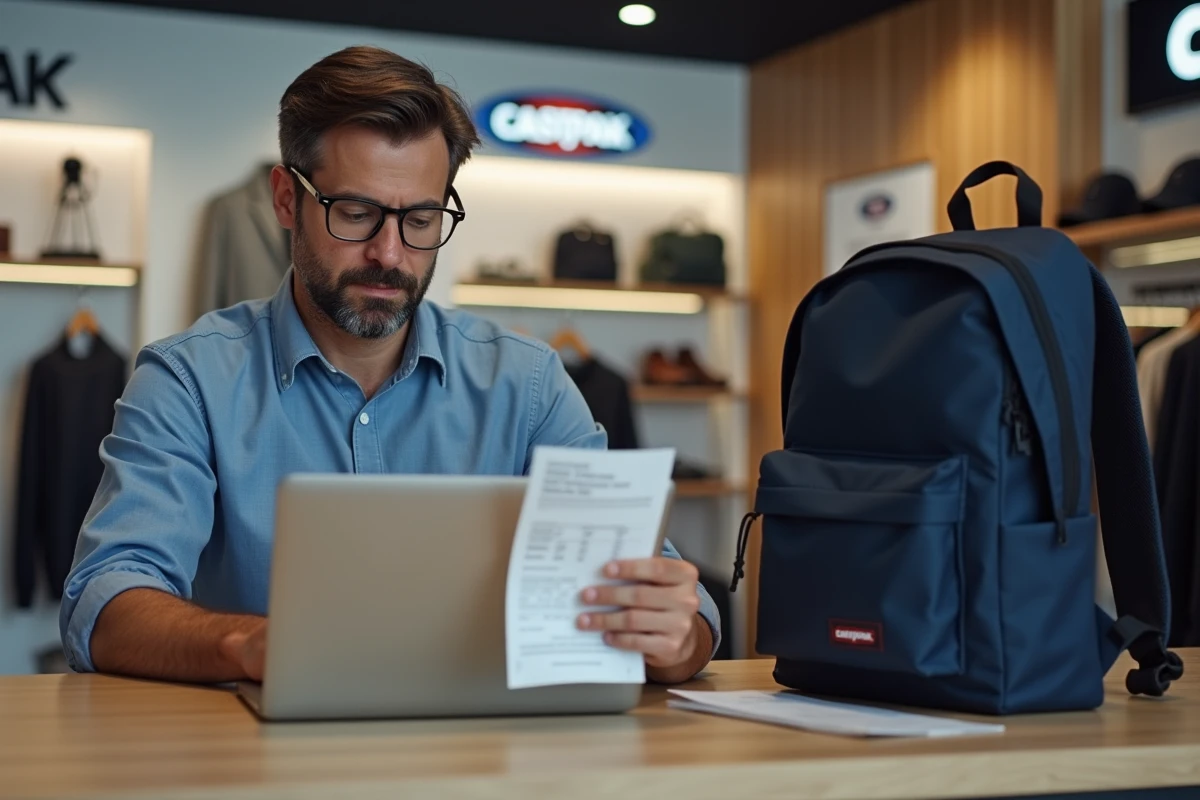
This is the criterion that most guides overlook, yet it filters out fraudulent sellers more effectively than a visual examination. Eastpak offers a warranty of up to 30 years on its products, free returns within 30 days, and free shipping on orders over a certain amount. A legitimate seller should be able to clearly explain these conditions.
Before buying on a marketplace or third-party site, we recommend checking three contractual elements:
- Does the seller explicitly mention the Eastpak warranty and its activation conditions?
- Do they offer an identifiable return policy, with a physical return address?
- Can they provide traceable proof of purchase (supplier invoice, order form from an authorized distributor)?
A reseller unable to answer these questions deviates from the official commercial framework displayed by Eastpak. The absence of verifiable after-sales service is often more revealing than questionable stitching. On peer-to-peer resale platforms, a price significantly lower than the usual rate combined with the inability to produce a receipt or original invoice should be enough to dismiss the listing.
The best-made counterfeit Eastpak bag will always end up revealing itself, but not necessarily through its stitching. It is the seller who cannot justify the warranty, return, or provenance that provides the most reliable signal.