
A handwritten letter slipped into an envelope remains the most powerful medium to anchor an intergenerational bond. Post-pandemic gerontology research confirms that “slow” media (letters, cards, notebooks) hold greater emotional value than digital exchanges, as they are tangible, manipulable, and can be reread before sleep. Grandchildren describe these letters as “objects of presence” from their grandparents.
Letter from Grandma to Her Granddaughter: The Materiality of Paper as an Emotional Vector
The choice of medium is not trivial. A letter on thick paper, written in ink, produces a sensory effect that neither a text message nor a voice message can replicate. The child touches the texture, recognizes the handwriting, and sometimes smells the fragrance left on the envelope.
Several European qualitative surveys on “multilocal” families show that handwritten letters function as transitional objects for children separated from their grandparents. The mail is reread, stored under the pillow, and shown to friends. Its physical dimension gives it a status that digital media cannot threaten.
We recommend writing on paper that the granddaughter can keep without it degrading: a sufficiently dense weight, ink that does not smudge when it comes into contact with water. These technical details extend the emotional lifespan of the message. Writing a letter from a grandma to her granddaughter on quality stationery transforms a simple word into a lasting memory.
Tone and Register: Calibrating Your Voice Between Tenderness and Humor
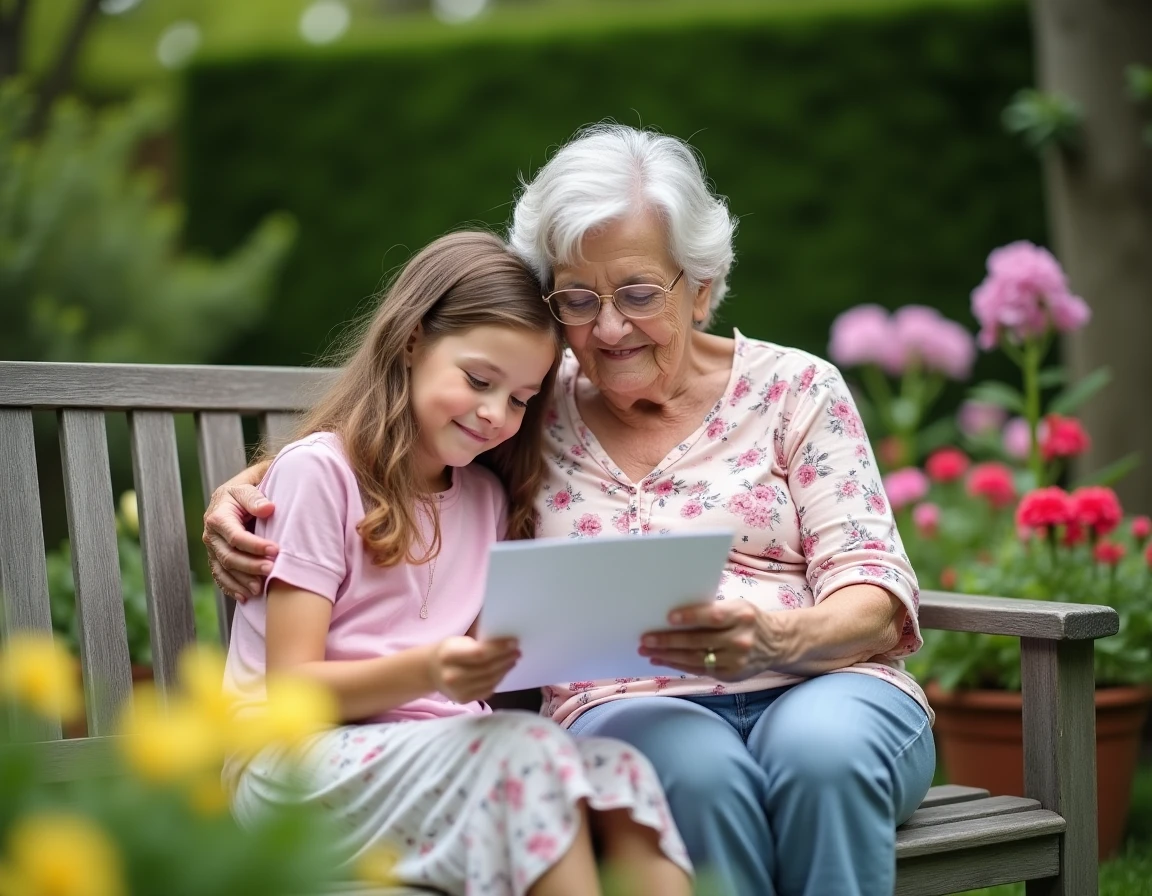
The most common trap is to adopt a uniformly solemn tone. A letter that is exclusively sentimental ends up sounding hollow, especially if the granddaughter grows up and rereads it during her teenage years. Alternating tender passages and funny anecdotes gives the text its longevity.
Humor acts as a relational glue between generations. Telling a youthful folly, a failed culinary memory, or a shared laugh anchors the letter in reality. The granddaughter does not reread a speech; she reconnects with her grandma’s voice.
Adapting the Register to the Granddaughter’s Age
Before the age of six, short sentences and concrete images (animals, cakes, games) convey the message better. Between six and twelve years old, the granddaughter begins to appreciate family stories and light confidences. In adolescence, the register can incorporate more personal reflections.
- Before six years: simple vocabulary, drawings in the margins, sentences of three to five words that read like a nursery rhyme.
- From six to twelve years: family anecdotes, grandma’s little secrets, childhood memories told like a story.
- After twelve years: sharing life experiences, discreet advice given without injunction, recognition of the granddaughter’s personality.
This calibration is not rigid. Some eight-year-old granddaughters love confidences, while others at fourteen prefer drawings. Observing what the child keeps and rereads guides better than any protocol.
Family Transmission Through Letters: Telling Without Moralizing
Recent work in gerontology identifies grandparents as “resilience mentors” for children, particularly through long-distance exchanges. Their comforting words can reduce anxiety and strengthen the sense of security for younger ones during times of crisis.
This benefit is particularly pronounced when narratives emphasize resources, humor, and the ability to “hang in there” rather than just focusing on traumas. In other words, a grandma who recounts how she overcame a failure conveys more than a moral lesson.
Embracing Vulnerability as a Lever for Empathy
Talking about past fears, mistakes, and what one wishes they had understood earlier serves as a lever for developing empathy in the child. The granddaughter discovers that her grandma was ten years old too, and that life has not always been simple.
This posture requires precise balancing. We observe that the most reread letters combine a personal memory, a named emotion, and a touch of humor that diffuses any gravity. The triptych works because it respects the child’s emotional capacity without overwhelming it.
Structure and Rhythm of a Grandma’s Letter That Leaves Memories
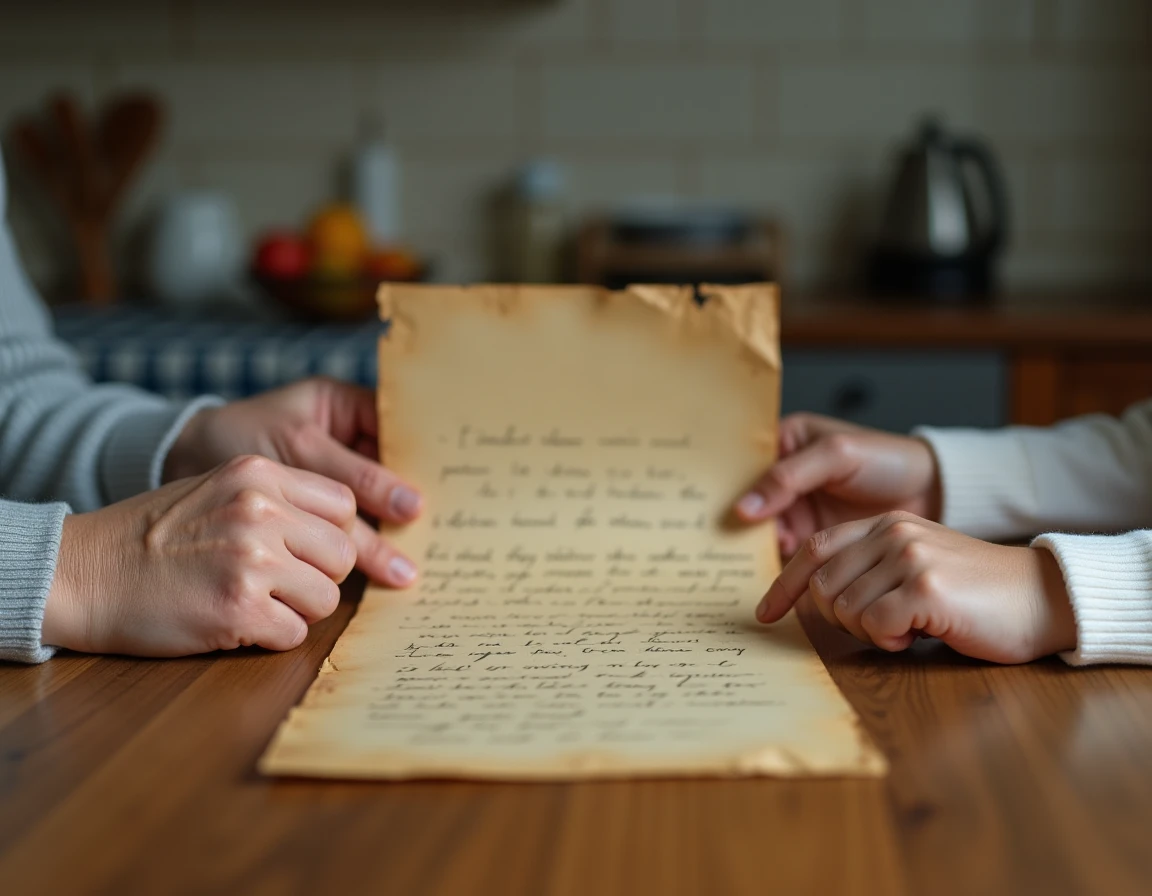
An effective letter does not follow a school plan. It starts with an emotional hook (a nickname, a shared recent memory), develops one or two anecdotes, and ends with a memorable closing phrase.
- The hook: a tender nickname or a reference to a moment lived together (“Do you remember the chocolate cake that overflowed from the oven?”).
- The body: a personal anecdote related to the granddaughter’s life, not a catalog of good feelings.
- The closing: a short, sincere sentence that can become a ritual between grandma and granddaughter (“I hug you tight, three times, as usual”).
Regularity matters more than length. A five-line card sent each month creates a continuous thread that the granddaughter looks forward to and recognizes. Occasional events (birthdays, holidays, Christmas) gain intensity because they fit into an already vibrant epistolary relationship.
When the Granddaughter Responds
The true indicator of success for a grandma’s letter is the response. Including an open question (“What is your best memory of this summer?”) or a little challenge (“Draw me your favorite animal and send it to me”) transforms the mail into a dialogue. The letter then becomes a shared object between two generations, not a sentimental monologue.
Families that maintain these epistolary exchanges find that the bond withstands better against geographical distance and the ups and downs of daily life. Paper transcends time, ends up in a memory box, and sometimes is read by the next generation.