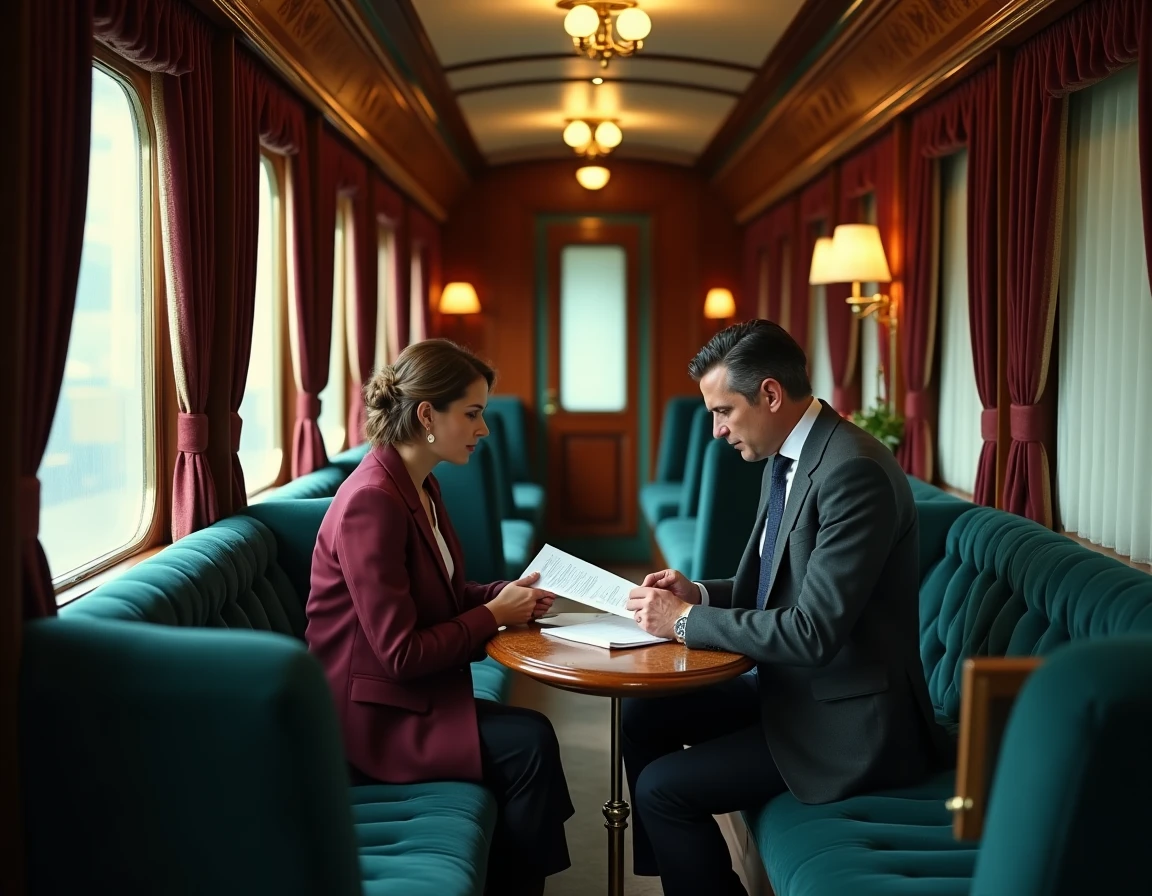
The Orient Express today refers to several distinct rail and maritime projects, each with a different capacity. Confusing the Venice Simplon-Orient-Express, the future Paris-Istanbul train, and the cruise version is like comparing three vehicles that share only a brand name.
Composition of Cars and Actual Capacity of a Luxury Train
The capacity of a prestigious train is not calculated like that of a TGV. A classic train optimizes the number of seats per square meter. A luxury train does the opposite: it maximizes space per passenger, which drastically reduces the number of travelers on board.
On the Venice Simplon-Orient-Express operated by Belmond, the composition reaches 17 cars. This impressive number is misleading, as the majority of these cars are sleeping cars converted into single or double cabins, along with dining cars and a lounge bar. The ratio of habitable cars to service cars explains why such a long train carries so few people compared to a regular train.
To better understand the number of passengers on board the Orient Express, one must think in terms of living space per traveler rather than the number of cars.

Orient Express La Dolce Vita: 62 Passengers for a New Train
The Orient Express La Dolce Vita project, led by Accor and Arsenale S.p.A., provides a precise figure. According to the official presentation from Arsenale, this train is designed to accommodate 62 passengers in its cabins and suites.
This number reflects a radical choice: spacious suites, a dining car with chef service, a lounge bar, and generous common areas. By comparison, a regional TER train of the same length would transport several hundred travelers.
Why 62 and Not More
The ultra-luxury positioning imposes strict design constraints:
- Each suite has a sleeping area, a sitting area, and a private bathroom, consuming the space of several classic compartments
- The dining cars must be able to seat all passengers in a single service, with table spacing incompatible with standard rail dining
- The common areas (bar, lounge, possibly spa) occupy entire cars without generating any sleeping berths
The figure of 62 passengers thus represents a deliberate choice for maximum comfort rather than a technical limit.
Restored Paris-Istanbul Train: A Range of 60 to 80 Travelers
The project to revive the Paris-Istanbul line, based on the historic cars of the Nostalgie-Istanbul-Orient-Express, aims for a slightly different capacity. Several luxury train specialists indicate a target capacity of around 60 to 80 passengers, for a composition of about fifteen cars.
The variation between 60 and 80 is explained by the configuration chosen for the restored sleeping cars. Some historic cars originally had convertible compartments that could accommodate one or two passengers depending on the time of day. The final choice between single cabins and double cabins alters the total capacity without changing the number of cars.
The Challenge of Restoring Rolling Stock
Restoring cars from the 1920s-1930s to meet current safety and comfort standards imposes compromises. Architect Maxime d’Angeac, tasked with reinterpreting the decor, works on balancing Art Deco fidelity with contemporary requirements (air conditioning, sound insulation, accessibility).
Each structural modification of a historic car can change the capacity by a few places. A wall reinforcement here, a bathroom expansion there, and the capacity per car goes from six to five passengers.
Orient Express Corinthian: 110 Passengers at Sea
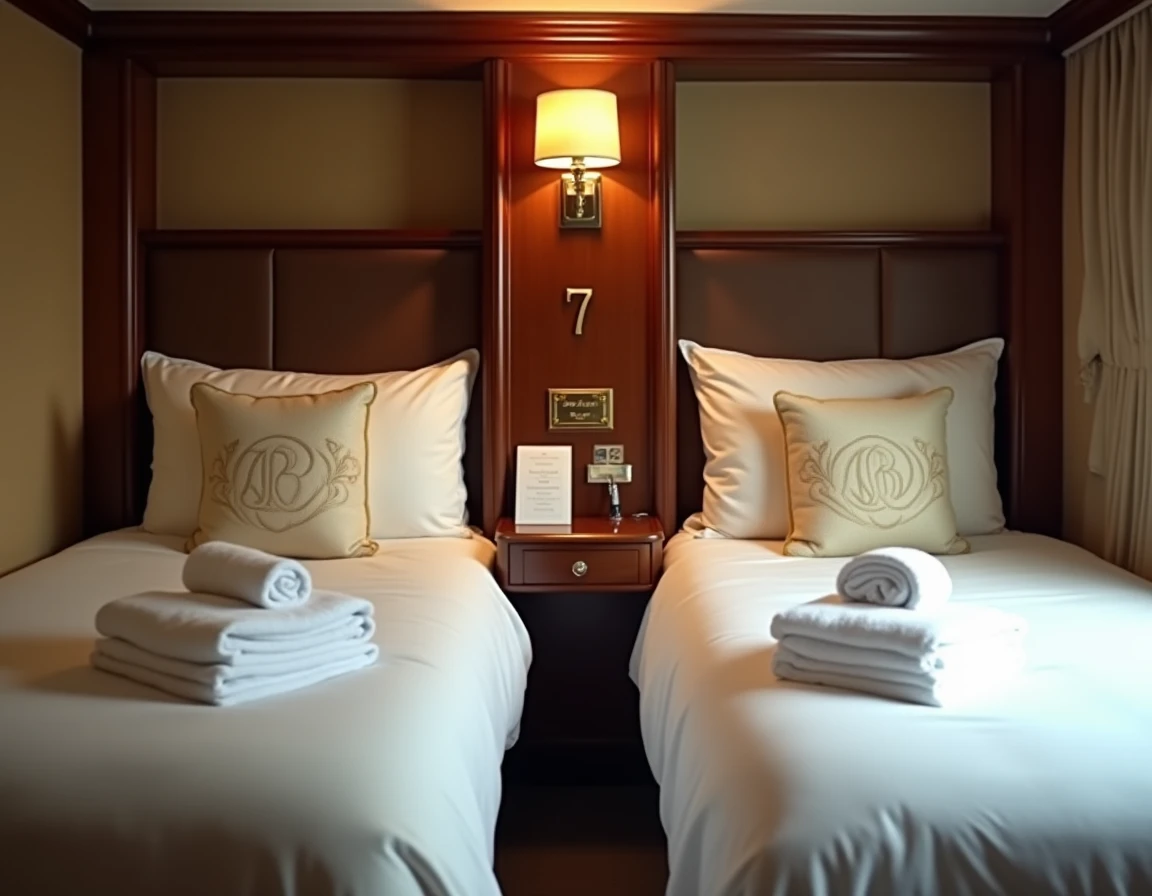
The Orient Express brand now extends to maritime with the Orient Express Corinthian, a cruise ship described as a “floating palace.” According to the description from the Swiss organizer Vos Voyages, this ship can accommodate 110 passengers in 54 suites.
The transition from rail to sea changes the capacity scale. With 110 passengers, the ship carries almost double that of the La Dolce Vita train, while maintaining a very high space-per-passenger ratio compared to classic cruise ships that carry thousands of people.
Comparison of Orient Express Capacities
| Version | Type | Capacity |
|---|---|---|
| Orient Express La Dolce Vita | New Train | 62 Passengers |
| Paris-Istanbul (restored) | Historic Train | 60 to 80 Passengers |
| Orient Express Corinthian | Cruise Ship | 110 Passengers (54 Suites) |
This table highlights a often-overlooked point: under the same brand coexist travel experiences whose capacity varies from one to two times. The common denominator remains a deliberately limited number of travelers, ensuring personalized service.
The limited capacity of these different Orient Expresses is not a constraint imposed. It constitutes the very foundation of the economic model: fewer passengers means a higher fare per person, more staff per traveler, and an experience that operators position at the opposite end of mass rail or maritime transport.