
Your sofa has seen better days, the seat is sagging, and the fabric shows signs of wear. Before rushing to the store to replace it, one question needs to be asked: who will take back the old one? Several options exist for getting rid of an old sofa, but they don’t all work the same way, and some have even become mandatory for sellers.
Mandatory take-back upon delivery: a little-known right
Are you buying a new sofa with home delivery? The seller is required to offer you the free take-back of your old furniture at the time of delivery. This principle, known as “one for one” take-back, stems from the REP (extended producer responsibility) system applied to furniture.
In practical terms, the item taken back must be of equivalent type to the one you are purchasing. A sofa for a sofa, not a sofa for a coffee table. The request must be made at the time of purchase, not on the day of delivery.
Many consumers are unaware of this right. Retailers do not always highlight it on their product sheets or at checkout. If you plan to make a purchase in a furniture store or online, as reminded by Déco en Vogue’s advice, be sure to ask the question before finalizing the order. An unjustified refusal can be reported to the DGCCRF.

Repair bonus for furniture: repair rather than replace a sofa
Before looking to get rid of your sofa, another option has emerged in recent years. The repair bonus for furniture, promoted by the eco-organization Ecomaison (formerly Eco-Mobilier), subsidizes repairs by certified artisans.
The principle is simple: you entrust your sofa to an approved repairer, and the aid is deducted directly from the bill. Sagging upholstery, weakened structure, torn fabric: these interventions can give several more years of life to a piece of furniture that seemed destined for the dump.
When repair is worth it
Not all sofas are worth repairing. Here are the cases where the option makes sense:
- The wooden frame is still solid, only the foam or padding is flattened. Reupholstering or changing the foam costs significantly less than a new sofa of equivalent quality.
- The fabric is damaged on the surface, but the internal structure (springs, straps) is holding up well. Reupholstering with a certified artisan using the repair bonus significantly reduces the bill.
- The sofa has sentimental value or a style that is hard to find in today’s market. Older convertible models with robust mechanisms, for example, are often better built than their entry-level new counterparts.
On the other hand, if the frame creaks, the slats are broken, or the foam has absorbed moisture, the cost of repair will often exceed the value of the furniture. In this case, take-back or recycling remains the logical route.
Donation, resale, or landfill: choosing the right channel for an old sofa
When repair is not feasible and store take-back does not apply (second-hand purchase, no new delivery planned), three main options remain. The choice primarily depends on the condition of the sofa.
Donation to a reuse organization
If your sofa is still usable (no gaping holes, no persistent odor, decent seating), organizations like Emmaüs or the recycling centers of the national network accept donations. Some will pick up the furniture at home by appointment. Others require direct drop-off.
A donated sofa must be clean and functional. Organizations refuse furniture that is too degraded, as the cost of restoration exceeds their capacity. Call ahead to check that they are accepting sofas at that time.
Resale between individuals
A sofa in good condition, especially if it is from a recognized brand or a convertible model, will find buyers on resale platforms. The resale price drops quickly (most second-hand sofas go for a fraction of their new price), but it is a solution that avoids waste.
Take honest photos, mention visible defects, and specify the exact dimensions. Second-hand buyers of bulky furniture often abandon the transaction if the measurements do not match their living room.
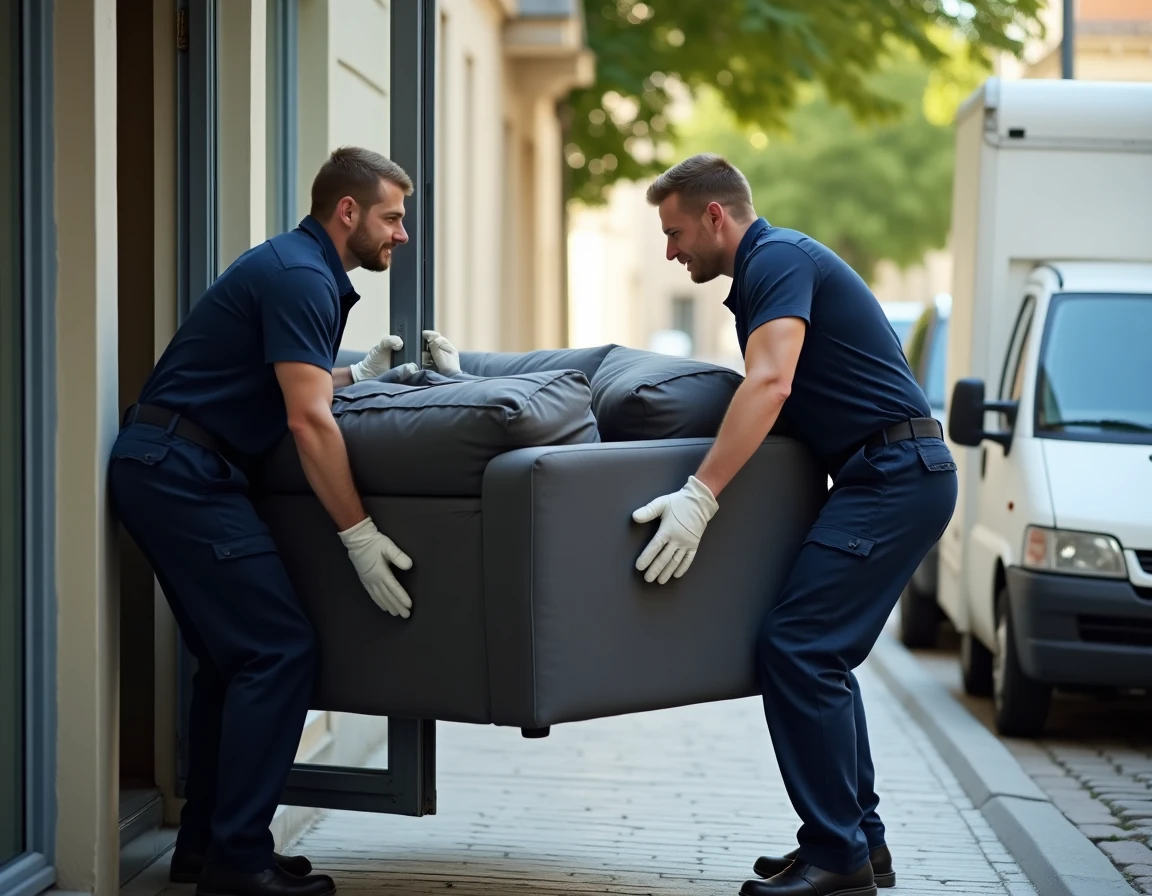
Landfill and bulky waste collection
For a sofa at the end of its life, two options remain available:
- Drop-off at the landfill, generally free for individuals. Sofas are directed to the recycling channel managed by Ecomaison.
- Collection of bulky waste organized by your municipality. The procedures vary: some cities offer pick-up by appointment, while others set collection days. Check with your town hall or on your intercommunal website.
- Private removal services, which are paid and can act quickly if you are pressed for time due to a move or imminent delivery.
Leaving a sofa on the sidewalk without a scheduled pick-up exposes you to a fine. The reflex of “I’ll just put it at the bottom of the building” remains common, but municipalities are increasingly issuing fines.
Anticipate take-back when purchasing the new sofa
The best time to arrange for the take-back of your old sofa is when you choose the new one. When making your purchase, check if the retailer offers the one-for-one take-back, and request written confirmation (email, mention on the order form).
If you are buying second-hand or without delivery, plan for the departure of the old furniture before the arrival of the new one. A living room cluttered with two sofas for several weeks is the classic scenario when the question is postponed.
Assess the condition of the sofa before deciding: a solid frame and tired foam point towards repair with a bonus, decent fabric and a healthy structure towards donation or resale, advanced degradation towards the landfill. Each channel has its logic, and the right decision depends on an honest assessment of what your old sofa still has to offer.